If you want Charlotte life with the skyline outside your window, restaurants around the corner, and transit within reach, 28202 offers a very different experience from the region’s more traditional suburban neighborhoods. For many buyers, that sounds exciting, but it also raises practical questions about space, parking, upkeep, and whether the lifestyle truly fits day to day. This guide will help you understand what living in Charlotte’s urban core actually feels like, who it tends to suit best, and what to weigh before you make a move. Let’s dive in.
Urban Core Living in 28202
Charlotte’s urban core is best understood as an amenity-rich, mixed-use part of the city rather than a neighborhood made up mostly of detached homes. Charlotte Center City Partners describes Center City as Uptown, South End, Midtown, and the broader two-mile radius around Trade and Tryon, and that framing aligns well with 28202.
In everyday life, that means housing, offices, restaurants, sports venues, and civic spaces are layered together. Instead of driving from one zone to another, you are often moving between parts of your day on foot, by bike, or with a short transit ride.
That blend is a big part of the appeal. If you enjoy being close to events, dining, and public spaces, 28202 can feel efficient, connected, and active in a way that many lower-density areas simply do not.
Walkability and Getting Around
One of the clearest advantages of 28202 is how easy it can be to move through your day without relying on your car for every stop. Walk Score rates 28202 at 84 and identifies it as Charlotte’s most walkable ZIP code. The same source gives it a Transit Score of 70 and a Bike Score of 61.
Those numbers support what many residents already expect from the area: errands, dining, events, and some work commutes can often happen without a long drive. CATS also points to Uptown as the place where the Blue Line, Gold Line, and other rapid transit corridors connect, linking residents to jobs, healthcare, education, and essential services.
That said, car-light living is not the same as car-free living. For some buyers, especially those with routines outside the core, a vehicle still matters. The difference is that in 28202, your car may be a backup tool instead of the center of your daily schedule.
Parking Takes More Planning
Parking is available, but it is more structured and managed than in most suburban areas. The City of Charlotte’s Park It program manages on-street parking throughout Uptown and nearby districts, including more than 1,800 metered spaces in Uptown and South End at $1.50 per hour.
The city also maintains residential parking permit areas in places such as First Ward, Third Ward, and Fourth Ward. There are also commercial vehicle parking restrictions within the area bounded by I-277 and I-77 during rush hours.
For you as a buyer, the takeaway is simple: convenience is real, but spontaneity around curb access is not always guaranteed. If easy parking right outside your front door is a top priority, urban-core living may feel like an adjustment.
Dining, Arts, and Entertainment Nearby
If you like a lifestyle where something is always happening nearby, 28202 stands out. Charlotte Center City Partners describes Uptown as a place where culture, arts, sports, dining, entertainment, living, and business all intertwine.
That is not just branding language. It reflects how the district functions. You can live near museums, performance venues, sporting events, restaurants, and public programming without needing to plan your week around long drives.
Major Arts and Culture Anchors
Some of Charlotte’s best-known cultural destinations are concentrated in and around the core. The Levine Center for the Arts campus includes Mint Museum Uptown, the Bechtler Museum of Modern Art, the Harvey B. Gantt Center, and Knight Theater.
The Blumenthal Arts Center also adds to that concentration with Belk Theater, Booth Playhouse, and Stage Door Theater. For buyers who value easy access to performances, exhibits, and public events, this level of proximity can be a real lifestyle upgrade.
Sports and Public Energy
The urban core also carries a steady rhythm tied to games, concerts, festivals, and city events. That can make the area feel lively and engaging, especially if you enjoy being close to the action rather than traveling in for it.
Of course, that same energy is not for everyone. If you prefer quieter surroundings and more separation from event traffic, it is worth thinking carefully about how often you want to be in the center of it all.
Parks and Outdoor Space in Uptown
Green space is part of the 28202 experience, but it looks different here than it does in suburban neighborhoods. Instead of large private yards and expansive residential greenbelts, the urban core tends to offer compact, well-used public spaces integrated into the city fabric.
Places like Romare Bearden Park and First Ward Park function as both parks and event venues. The Green also serves as a public gathering spot and host site for programming in Uptown.
The City of Charlotte’s Urban Arboretum Trail adds another layer by helping connect neighborhoods, parks, transit stations, bike lanes, and light rail. So while you may give up private outdoor space, you gain access to public space that is built into your routine.
Housing Choices in 28202
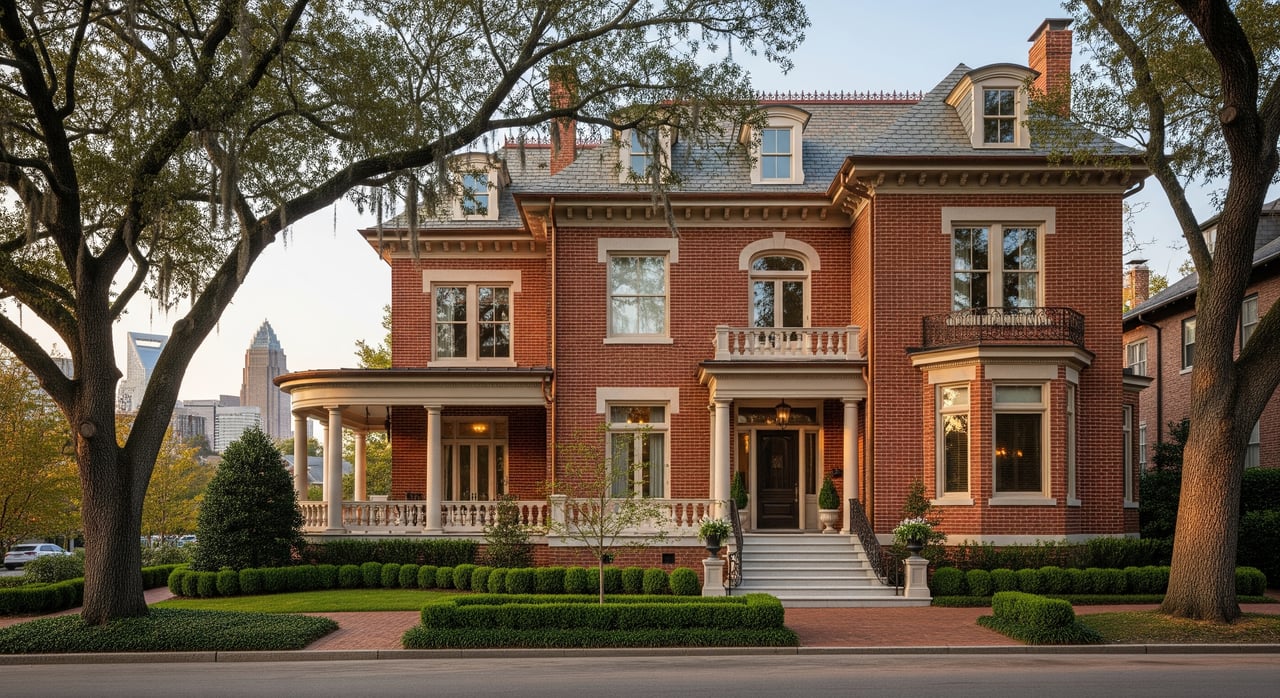
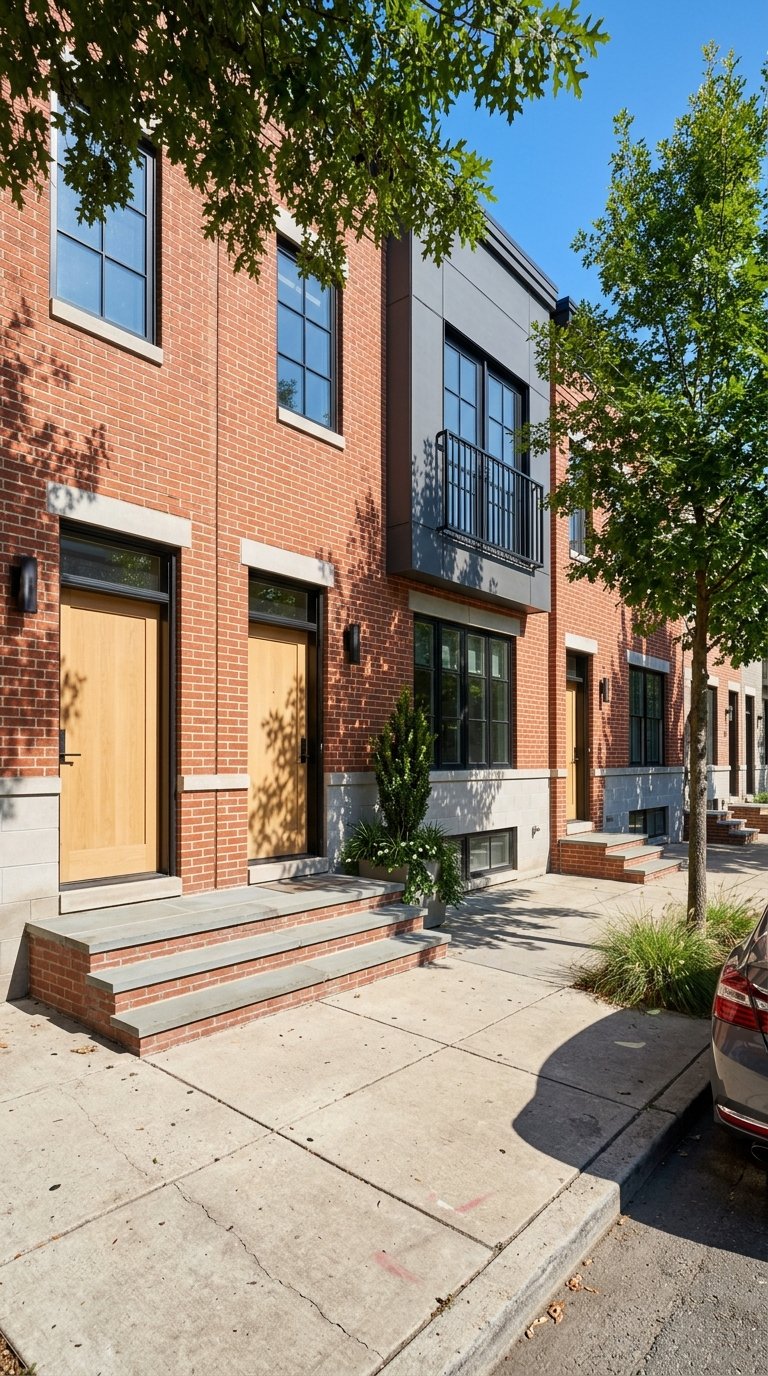
The housing mix in Charlotte’s urban core is different from what many buyers see first in the broader metro. Instead of detached homes on larger lots, 28202 is more closely associated with condos, townhomes, and other attached housing formats.
Charlotte Center City Partners notes that Center City offers a variety of housing choices, and the pipeline shows that residential growth is still active. Recent examples include the planned conversion of 400 South Tryon into about 399 residences, Trella Uptown’s 353 total units, and the Iron District’s first phase with up to 500 residential units.
That matters because it shows the core is not frozen in time. It is still adding places to live, which supports the idea that 28202 is not only a place to visit, work, or rent, but also a place to own long term.
Condo and Townhome Ownership Basics
North Carolina law helps explain why ownership in the core often feels different from owning a detached home. Under the North Carolina Condominium Act, condos involve separately owned units plus shared common elements, and the unit owners’ association is responsible for budgets and collecting assessments for common expenses.
The Planned Community Act works in a similar way for many townhouse-style communities, where owners may be obligated through the community declaration to pay shared expenses such as insurance or other common costs. In practical terms, that usually means less exterior maintenance for you, but more shared governance, HOA dues, and rules tied to common areas.
How It Compares to Suburban Ownership
If you are deciding between 28202 and a suburban area, the tradeoff often comes down to access versus space. In the urban core, you are typically choosing convenience, walkability, and lower exterior maintenance.
In a detached suburban home, you often gain more privacy, storage, and control over your property, but you also take on more upkeep and usually give up some of the easy access to dining, arts, and transit. Neither model is better across the board. It depends on how you want to live.
Who Usually Thrives in Charlotte’s Urban Core
Urban-core living tends to work best for buyers who want to spend more time using the city and less time maintaining a larger property. Charlotte Center City Partners reports that Center City continues to attract young, diverse, and educated professionals, with 69% of residents holding a bachelor’s degree and 27% holding a graduate degree or higher.
That profile helps explain the appeal. Buyers who value convenience, flexible transportation, and built-in access to cultural programming often find the lifestyle a strong fit.
You may be especially well matched to 28202 if you want:
- Walkable access to restaurants, events, and public spaces
- Transit connections that reduce the need to drive everywhere
- A condo or townhome lifestyle with less exterior upkeep
- A home base that feels connected to the energy of Charlotte
- A location that can work well for relocation or a car-light routine
Downsizers may also find the area appealing if the goal is to simplify homeownership while staying close to services and activities. The main question is not whether the area is livable. It is whether its priorities match yours.
What to Consider Before You Buy
Before buying in 28202, it helps to be honest about your daily habits. If you want a yard, maximum privacy, and easy guest parking, a suburban neighborhood may fit better.
If you want to walk to dinner, catch events nearby, use transit, and avoid as much exterior maintenance, the urban core may feel like a smart lifestyle move. The best decision usually comes from matching your home choice to your routine, not just your wish list.
It is also worth thinking beyond the next year or two. Charlotte Center City Partners reports more than $4 billion in the development pipeline for Center City, along with ongoing efforts to shape Uptown into a more balanced and complete central district.
That continued evolution matters for buyers who want confidence that the area is still growing as a place to live. In other words, 28202 is not just Charlotte’s business center. It is increasingly a long-term residential option for buyers who want an urban ownership model.
If you are weighing Charlotte’s urban core against suburban options, the right move comes down to how you want your home to support your day-to-day life. If you want clear, local guidance on how 28202 compares with other Charlotte-area choices, David Wishon can help you evaluate the fit and move forward with confidence.
FAQs
What is daily life like in Charlotte’s 28202 ZIP code?
- Daily life in 28202 is centered on walkability, nearby dining and entertainment, transit access, and a dense mix of residential and commercial spaces.
Is 28202 a good fit if you want to live without driving everywhere?
- It can be, since 28202 has strong walkability and transit access, but most buyers should still expect some situations where having a car is helpful.
What types of homes are common in Charlotte’s urban core?
- Condos, townhomes, and other attached housing options are more common in 28202 than detached single-family homes.
How does parking work in Uptown Charlotte and 28202?
- Parking is actively managed by the City of Charlotte with metered spaces, permit areas, and certain restrictions, so it usually requires more planning than suburban parking.
Who tends to enjoy living in Charlotte’s urban core most?
- Buyers who value convenience, walkability, arts, dining, events, transit access, and lower-maintenance ownership often find 28202 to be a strong fit.